
Research
Improving Life Through Research
Explore our evolving research programmes and join us on this transformative journey.
Research Sites

Soweto
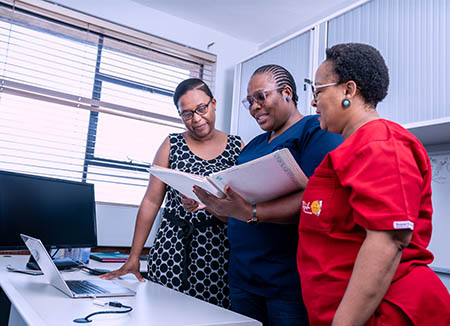
The head office of the Perinatal HIV Research Unit (PHRU) is based in Soweto, an urban African township of between 1.4-3 million people. PHRU has strong ties to this community. The unit is located on the campus of the Chris Hani Baragwanath Academic Hospital (CHBAH) in Soweto – a tertiary-level teaching hospital that has occupancy of close to 3000 beds, we have easy access to a central transport hub that facilitates transport throughout the country. CHBAH and our Clinical Research Site (CRS) are affiliated to the University of the Witwatersrand. We have been involved in HIV research since 1996 and have conducted cutting edge therapeutic and preventive research. We have played a significant role in the provision of antiretroviral treatment to HIV infected people in Soweto since 1996. PHRU has an adult treatment programme which has extensive expertise in the treatment and care of adults, adolescents and pregnant women. As a tertiary hospital, we are in the unenviable position to have direct access to patients who have HIV, TB co-infection and malignancies. We have access to 26 clinics offering tuberculosis (TB) services and 13 offering TB and HIV services in Soweto. We work closely with government clinics in Soweto, from where participants can be recruited and where participants who are co-infected with TB and HIV are referred for treatment. PHRU also works with Lesedi Hospital where patients are referred for X-rays. Every month, PHRU can recruit ~100 TB patients. Furthermore, in 2008 PHRU established Zazi HIV Counselling and Testing (HCT) clinic also situated on the CHBH campus. The clinics provide comprehensive and free-of-charge HIV HCT services such as good quality pre-test and post-counselling and testing for all age groups and genders. Zazi clinic is a walk-in facility, no scheduling is necessary. Clients that test HIV-positive at the clinic are offered a CD4 count test and referred for care.
PHRU has the experience of conducting a variety of TB clinical trials in Soweto:
– TB treatment clinical trial; Rifapentine-containing treatment shortening regimens for pulmonary tuberculosis: A randomized, open-label, controlled phase 3 clinical trial (TBTC study 31)
– TB Preventative clinical trial; A phase IIb, double-blind, randomised, placebo controlled study to evaluate the efficacy, safety and immunogenicity of GSK Biologicals’ candidate tuberculosis (TB) vaccine GSK 692342 against TB disease – (AERAS),
– Observational study for individuals treated for Pulmonary Tuberculosis (TBTC STUDY 36)
– Prospective cohort studies (BMG),
– Operational assessment study (BK),
– General Molecular research study (BDS),
– Investigator site lead studies (ROCHE) Lung cohort study,
– Pilot study (DISSCON),
– Comprehensive study of Human model (LTNP ship)


Aeroton
In 2008, PHRU established an Adolescent Centre in Kliptown, within Soweto and less than 10 km from Chris Hani Baragwanath Academic Hospital. The Centre initially provided youth-friendly HIV prevention, testing, outreach, and psychosocial support services. These activities offered critical insights into the needs of HIV-infected youth, highlighted barriers to parent-adolescent communication, and revealed knowledge gaps around HIV and sexual health.
Over time, the Centre transitioned into a clinical trial site, participating in a study evaluating the use of pre- and post-coital vaginal tenofovir gel for HIV prevention among women 18-30 years of age. Low uptake of the gel underscored the need for alternative prevention strategies. PHRU remained dedicated to reducing the burden of HIV in South Africa, conducting numerous NIH-funded HIV vaccine trials at the site.
In 2020, leveraging its existing infrastructure and expertise in vaccine storage and preparation, the site pivoted seamlessly to COVID-19 vaccine research. PHRU participated in several major COVID-19 vaccine trials, including the ENSEMBLE study, which contributed to the global registration and rollout of a vaccine used by millions. PHRU investigators also played a key role in the Sisonke study, which vaccinated nearly 500,000 healthcare workers during a period when the national rollout faced significant delays, helping to save lives and reduce hospitalizations. The study provided real-world evidence of the Ad26 COVID-19 vaccine’s effectiveness against the Beta, Delta, and Omicron variants. PHRU remained committed and continued its efforts in evaluating next-generation COVID-19 vaccines. PHRU’s pharmacists played a central role in partnering and capacity-building initiatives on the Sisonke study through training activities involving public and private sector pharmacists to meet clinical trial standards for vaccine preparation.
PHRU site in Aeroton is currently involved in a TB preventive vaccine study, as well as in Gilead’s PURPOSE 1 study, conducted in South Africa and Uganda and involving over 5,000 adolescent girls and young women. The study demonstrated a remarkable 100% efficacy of lenacapavir in preventing HIV infection among cisgender women. This twice-yearly injectable has shown superior protection compared to daily oral PrEP medications.
In 2022, the PHRU clinical trial site relocated to Aeroton, strategically positioned near Kliptown and Soweto, and remains within 10 km of Chris Hani Baragwanath Academic Hospital.
Matlosana
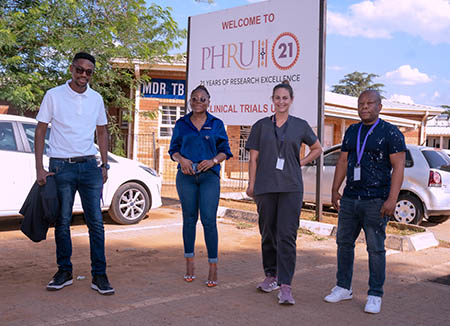
The PHRU Matlosana site is located at the Tshepong Hospital (TH) which is part of the Klerksdorp/Tshepong Hospital Complex (KTHC) in Matlosana Municipality, a sub-district of the Dr Kenneth Kaunda (KK) health district in North West Province. PHRU employs ~130 staff in the Dr Kenneth Kaunda Health District.
The KTHC is a Provincial referral centre for DR TB. Site staff, have extensive experience in managing TB and TB HIV co-infected patients according to NDOH guidelines. The PHRU Matlosana site is managing numerous clinical research studies in the district. These include clinical trials focusing on: smoking cessation; novel agents against drug-sensitive and drug-resistant TB; cluster randomised trials; and several observational studies. There are two public sector hospitals in Matlosana – administered as a single entity, the Klerksdorp Tshepong hospital Complex (KTCH). The KTCH is a regional referral facility, receiving patients for specialty care from the entire Province.
All patients with MDR-TB in the district are referred to the Tshepong Hospital Complex MDR-TB unit for further management by the surrounding sixteen sub-district clinics. The MDR TB Unit has 76 beds (36 beds in phase one and 40 beds in phase 2). The bed occupancy rate is at 90%. PHRU Matlosana CTU is located in the MDR-TB Unit’s Wing of the Tshepong Hospital Complex and assists in managing the MDR-TB Out-patient Unit, i.e. managing bookings, facilitating tracing of patients, counselling and initial assessment of patients during the visit. After initial assessments (i.e. vital signs, contract records, chest x-rays and counselling) are done, the patient is sent to the assigned hospital doctor for completion of assessment, investigations and further management. Since PHRU is in the MDR-TB Outpatient department, we have the advantage of identifying possible study participants without unduly influencing them to participate. The Outpatient Department sees at least 4 – 10 newly diagnosed patients per week, thus possibly being able to identify a minimum of 64 patients in 16 weeks. PHRU has established a good working relationship with the 16 sub-district clinics and have done extensive HIV and TB research (Table 1). The clinics have served as catchment sites for study participants.
The PHRU Clinical research Sites (CRS) are well-established sites with experienced clinical and research support staff and well-equipped administrative, pharmacy and laboratory facilities. The logistics and training required for protocol implementation can be achieved safely and expeditiously. Over the last 10 years PHRU has recruited over 3,000 participants in trials. The breadth of clinical research at our CRS ranges from NIH-funded network-related multicenter trials to NIH-funded non-network trials, as well as investigator-initiated studies and pharmaceutically sponsored trials. The areas of investigation covered by these trials demonstrate experience in a variety of scientific priorities. The scientific contributions of this CRS and the ability to conduct trials are unique and the CRS is positioned to effectually conduct clinical trials.
There is an on-site data management centre within the KTCH premises, three clinical facilities with consulting rooms, office space, a–80oC freezer, lab freezer and a cooled centrifuge. We have access to hospital facilities for radiological investigations and research specimens are couriered to one of three laboratories in Johannesburg daily. All research staff are GCP trained and we employ several experienced study coordinators, all of whom are internally and externally monitored. Prof Variava, the head of internal medicine at the Klerksdorp Tshepong Hospital Complex provides overall clinical oversight at the site and we have research trained pharmacists and several research doctors.

Botshabelo
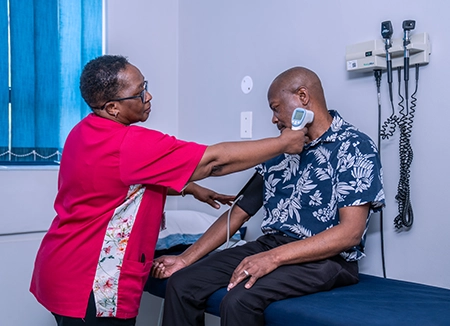
Our site in Botshabelo was first established in 2012, after funding was obtained to set up high volume male circumcision clinics at Pelanomi and Botshableo Hospitals. Botshabelo is an urban township located about 55km from Bloemfontein but has little industry or employment opportunities for its people. Our site is located at the Botshabelo Hospital and has conducted several important studies apart from circumcising about 8,000 young men. It was a site for a large cluster randomsied trial of a comprehensive household intervention for household contacts of TB index patients, and then in a follow up whole genome sequencing study, identified household contacts who had been exposed to the index patient but had not developed TB disease. Therafter the site has been part of the BluPrint study which assessed whether the long half of bedaquiline in people who had interrupted bedaquiline containing MDR treatment were more at risk of selecting bedaquiline resistance. The site is currently recruiting emergency room attendees to a study of TB prevalence in these patients and the people who accompany them.



Research Syndicates

NM Syndicate
Led by Prof Martinson works at four sites in South Africa and includes a broad range of research topics using both observational and interventional study designs. Neil Martinson and his staff at the PHRU have made substantial contributions to research in HIV and tuberculosis (TB) and during the pandemic, COVID-19, with a strong focus on intersections of these infections in both adults, pregnant people and children. Their studies have addressed the prevention of TB, understanding the interactions between TB and HIV, investigating viral drug resistance linked to programs for preventing mother-to-child HIV transmission (PMTCT), and active case finding for TB among HIV-infected pregnant women and household contacts of TB cases. His group more recently has also contributed to key research areas such as evaluating systematic targeted universal testing for TB (TUTT), interventions for TB in primary care clinics, as well as clinical trials on novel TB treatments and strategies to prevent TB, often in populations with a high burden of HIV. His group has piloted and then tested comprehensive interventions for household contacts of TB patients to assess yield and impact of testing all people in the household for HIV and TB then referring them for treatment. His group has assessed causes of death in a variety of populations, most recently people living with HIV admitted to hospital. A key strategy of the group is to include non-communicable diseases into their research programme. The group has a team assessing lymphomas and earlier diagnosis, has assessed the pharmacogenetics of people who do not respond to hypertensive medications; and based on preliminary data, they are planning to conduct research into risks for TB in diabetics in South Africa.
Their group has two sites with capacity to conduct complex clinical trials of novel agents to treat and prevent TB. The site in Matlosana at Tshepong Hospital has and continues to conduct many of the trials that informed novel regimens for drug resistant TB and safety of these in pregnant women and children. More recently the site has completed a COVID vaccine and RSV vaccine trial in children. PHRU Matlosana was part of an intensive cohort study susceptibility and transmission of COVID-19 in South Africa. The Soweto site has contributed patients to three TB vaccine trials and to shortening of TB treatment. Bot sites have recruited patients to trials of host directed therapy as adjunctive therapy for TB – including statins, asparin and ibuprofen and both are currently following up patients in the M72 vaccine trial sponsored by the Gates Medical Research Institute. The two sites have comprehensively equipped laboratories onsite, capable of processing PBMCs by proficiency-tested laboratorians, and separating and snap freezing PK specimens and storing specimens for short term in freezers with uninterrupted power supply and SMS notifications if there is a power failure or temperature excursion. Similalry both sites have world-class research pharmacies that have withstood regulatory and other audits.
Prof Martinson’s group collaborates widely, mostly with investigators at Johns Hopkins University but with numerous local and international collaborations with institutions such as the National Institute for Communicable Diseases and Johns Hopkins University have allowed unique investigations of immune control of HIV (so-called “elite controllers”) and resistance to TB infection. Their research has been funded primarily by the NIH, Gates Foundation, SAMRC, The Global Alliance for TB Drug Development, and Pharmaceutical companies.
His studies have recruited from a diverse collection of sites across South Africa, reflecting the high burden of both HIV and TB in the country. Principal recruitment locations include the Perinatal HIV Research Unit at Chris Hani Baragwanath Academic Hospital in Soweto, Johannesburg, which serves as the main base, as well as extensive research platforms in Matlosana (Klerksdorp Tshepong Hospital Complex, North West Province), Limpopo Province (including Polokwane Provincial Hospital), and a downtown Johannesburg clinic (ZuziMpilo).


HIV Vaccines Trial Network (HVTN)
Established in 2001, our HIV Vaccines Trials Network (HVTN) CRS, based in Soweto, is a critical site to conduct HIV vaccine trials because of our proven ability to access high- and low-risk populations. Such access makes our site indispensable for trials evaluating safety, tolerability, immunogenicity (Phase I/IIa) efficacy (Phase IIb/III) and eventual implementation of HIV vaccines.
In the last six years of our grant funding, we successfully conducted four HVTN Phase I/IIa HIV vaccine clinical trials: of 116 participants enrolled, zero became HIV-infected. We also enrolled participants at high risk of HIV in three Phase IIb-III trials, contributing 891, or almost 1 in 10 participants to the HVTN efficacy trial portfolio, with an estimated incidence of 36/891 (4.0%) acquired HIV (incidence 3.3 per 100 person years, CI 2.4-4.6).
Furthermore, we can accomplish this scale of work concurrently: worldwide, Soweto-Bara remains the only site which concurrently enrolled high numbers of participants into three Phase IIb-III trials without any imposed limitations (some sites enrolled into only one trial at a time; other sites who were concurrently enrolling had limitations imposed on recruitment) – while also conducting phase I-IIa trials.
Our partner network not only facilitates our trials but will enable us to implement a successful vaccine in the future: the PHRU has a proud history of translating research into exemplary implementation programmes with prevention of mother-to-child transmission and antiretroviral treatment roll-out.
The Perinatal HIV Research Unit (PHRU) Vaccines Research Centre, located at the Chris Hani Baragwanath Academic Hospital in Soweto, South Africa, is at the forefront of clinical research focused on developing vaccines and monoclonal antibodies. It has capacity to conduct early phase (1,2,2a) and advanced phase (2b,3,4) clinical trials.
The center is also an NIH-funded Clinical Research Site of the HIV Vaccines Trials Network (HVTN), conducting research into HIV vaccines and monoclonal antibodies both for prevention and disease remission. These trials aim to explore the suitability of these strategies for regions like sub-Saharan Africa where many people live with HIV. The ultimate goals of these efforts are to contribute to the discovery, evaluation and eventual licensing of an effective HIV vaccine as well as contributing toward curative strategies that could be broadly implemented.
In addition, the PHRU Vaccines Research Centre is deeply involved in capacity-building initiatives. The center collaborates with national and international partners to enhance clinical trial delivery capabilities and infrastructure. This includes training health professionals in research, developing robust clinical trial protocols, and ensuring the highest standards of ethical conduct in research. By building local capacity, the center not only advances its own research objectives but also strengthens the broader health system’s ability to conduct high-quality clinical trials
Capacity development initiatives include training healthcare professionals such as doctors and nurses in clinical research, building research administration expertise amongst support staff, expanding research facilities to accommodate large-scale and specialized trials, and conducting community outreach programs to raise awareness about vaccine trials.
The PHRU Vaccines Research Centre’s work is supported by a network of collaborations and partnerships that extend beyond South Africa. These partnerships facilitate the sharing of knowledge, resources, and expertise, which are essential for tackling complex health challenges. The Centre’s commitment to research excellence is reflected in its numerous peer-reviewed publications, and presentations at international scientific conferences. Through its comprehensive approach to vaccine research and capacity building, the PHRU Vaccines Research Centre contributes toward conquering disease.
PHRU has been part of the leadership and involved in every HIV vaccine efficacy trial ever conducted on the African continent.
PHRU investigators were involved in the Sisonke study, that vaccinated almost 500 000 health care workers, at a time when the national vaccine roll-out faltered, saving lives and reducing hospitalisation. The Sisonke study also established the RWE of the Ad 26 COVID-19 vaccine against emerging variants of concern such as Beta, Delta and Omicron. PHRU has also been instrumental in evaluating next generation COVID-19 vaccines and was involved in the ENSEMBLE COVIS-19 vaccine that led to the registration and use in millions of people worldwide.
HIV Prevention Trials Network (HPTN)
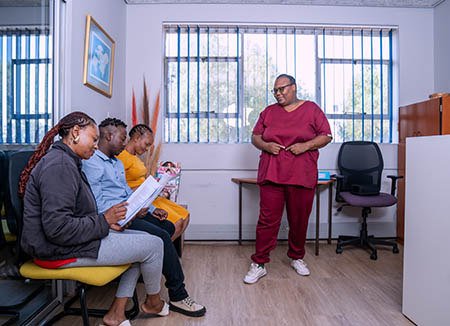
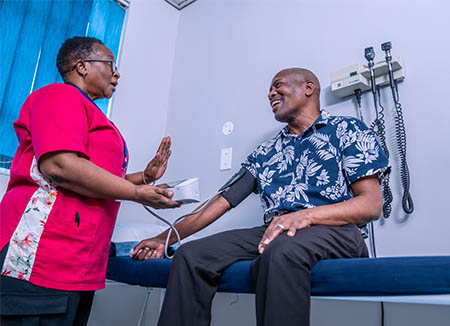
The HPTN CRS is in Soweto, on the outskirts of Johannesburg and within Chris Hani Baragwanath Academic Hospital complex. Study participants are drawn largely from the surrounding Sowetan population, and travel to the site by public transport that costs a nominal fee.
The HPTN CRS focusses on adolescent girls and young women (AGYW) and Men who have sex with men (MSM) and is renowned for its ability to cumulatively enrol more than 1,000 women, men and discordant couples into diverse HIV prevention efficacy studies.


AIDS Clinical Trial Group (ACTG)
Our ACTG Clinical Research Site (CRS) is part of the PHRU-Setshaba CTU and is based on the premises of Chris Hani Baragwanath Academic Hospital (CHBAH).
Operational since 2004, the CRS has a well-established relationship with the local clinics and hospitals and has strong ties with the community from which it recruits its participants. The ACTG CRS has been involved in clinical research since 1996 and its experience in HIV clinical trials extends to pharmaceutical- and investigator-driven research trials.
The CRS’s research has had global impact by contributing data to evidence used for World Health Organization (WHO) recommendations and approvals of non-standard antiretroviral doses by the US Food and Drug Administration (FDA). It has participated in pivotal studies that have impacted on antiretroviral therapy (ART) treatment strategies.

International Maternal Pediatric Adolescent AIDS Clinical Trials Network (IMPAACT)
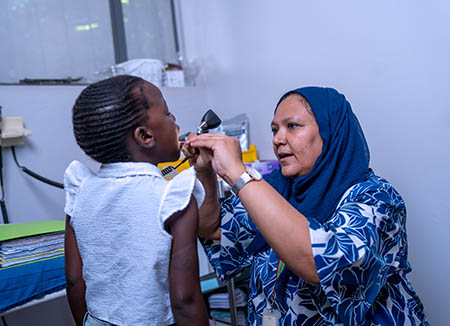
Led by Dr Avy Violari since its inception, our Soweto IMPAACT Clinical Research Site (CRS) is one of the oldest paediatric clinical trials sites in Africa, having been involved in clinical trials since 1996.
With our infrastructure and expertise, we are able to continue contributing to the development and implementation of clinical trials in infants, children, adolescents and pregnant women to 1) optimise the treatment of HIV; 2) develop strategies for ART-free remission; 3) prevent, diagnose and treat TB; and 4) diagnose and manage HIV-related co-infections and comorbidities, particularly those related to neurocognitive function and mental health.


Social & Bio-behavioural
As part of its research agenda, PHRU conducts innovative social science, behavioural and economic research. Over the years, this research has informed many of PHRU interventions.
This diverse area of research has included such varied past and current topics as:
– Masculinity and men’s sexual behaviour
– Adolescents’ attitudes and perceptions
– Living with and dying of AIDS
– HIV and traditional medicine
– Health and economic impact
– Adherence to antiretroviral treatment
– HIV/AIDS and the media
– Male perspectives on relationships and sexual engagement
– Men who have sex with men (MSM)
Sexual risk behaviours for HIV transmission among men who have sex with men have not been well described. Since the majority of infections occur via heterosexual intercourse in Africa, HIV prevention and testing needs of MSM have, to date, received little attention.
Projects focused around living with HIV and dying of AIDS aim to gain a greater understanding of the emotions of people infected and affected with HIV, what support structures within the household and community exist and the various meanings of death in the context of the socio-cultural background in Soweto.
Studies focused around HIV/AIDS and the media have brought together the expertise of HIV/AIDS researchers and journalists to investigate aspects of HIV coverage in the media.
Behavioural research among adolescents has provided important, evidence-based advances in service provision for this population and an entry point to engaging adolescents in the research process.


Vaccines Research Centre
With the help of our trial participants, the Prevention Community Advisory Board (CAB) and our specialised vaccine research pharmacy, we lead ground-breaking vaccine work. We conduct Phase I, II, III and post-marketing clinical trials with volunteers of all ages for vaccines that aim to protect against Human Immunodeficiency Virus (HIV), Human Papilloma Virus (HPV), tuberculosis (TB) and influenza (flu) amongst other. The PHRU Vaccines Research Centre was the first site in South Africa to conduct an HIV vaccine trial, and we also conducted the trials testing the first South-African-developed HIV vaccine candidate.
Since 2001, the Vaccines Research Centre at the PHRU has been partnering with the Soweto community and volunteers of all ages to research better ways to prevent diseases such as:
– HIV
– Human papillomavirus
– Gonorrhoea
– Tuberculosis
– Influenza
– COVID-19